Categories
Conferences

SSRL User Meeting

A smiling man dressed in a colorful shirt enthusiastically gestures at a powerpoint slide stating "A single hectare of seagrass beds can support 80,000 fish and 100 million small invertebrates."

Roger was fortunate to be an invited speaker at the 2025 SSRL/LCLS User Meeting held at SSRL in Menlo Park, CA, Sep 21-26. In his talk (above), he presented exciting micro-X-Ray Fluorescence maps of different sulfur species in cryosectioned eelgrass roots and rhizomes. The results point to at least two different defense mechanisms that these enigmatic plants use to counteract the nighttime threat of a potent phytotoxin, hydrogen sulfide. Roger and coauthor Jocelyn Richardson are writing up their preliminary study for submission to New Phytologist. Next steps are likely to include studies of seagrasses grown in controlled laboratory settings, to isolate different pathways of sulfur transformations in the organisms.

Categories
Conferences

MWGB 2024!

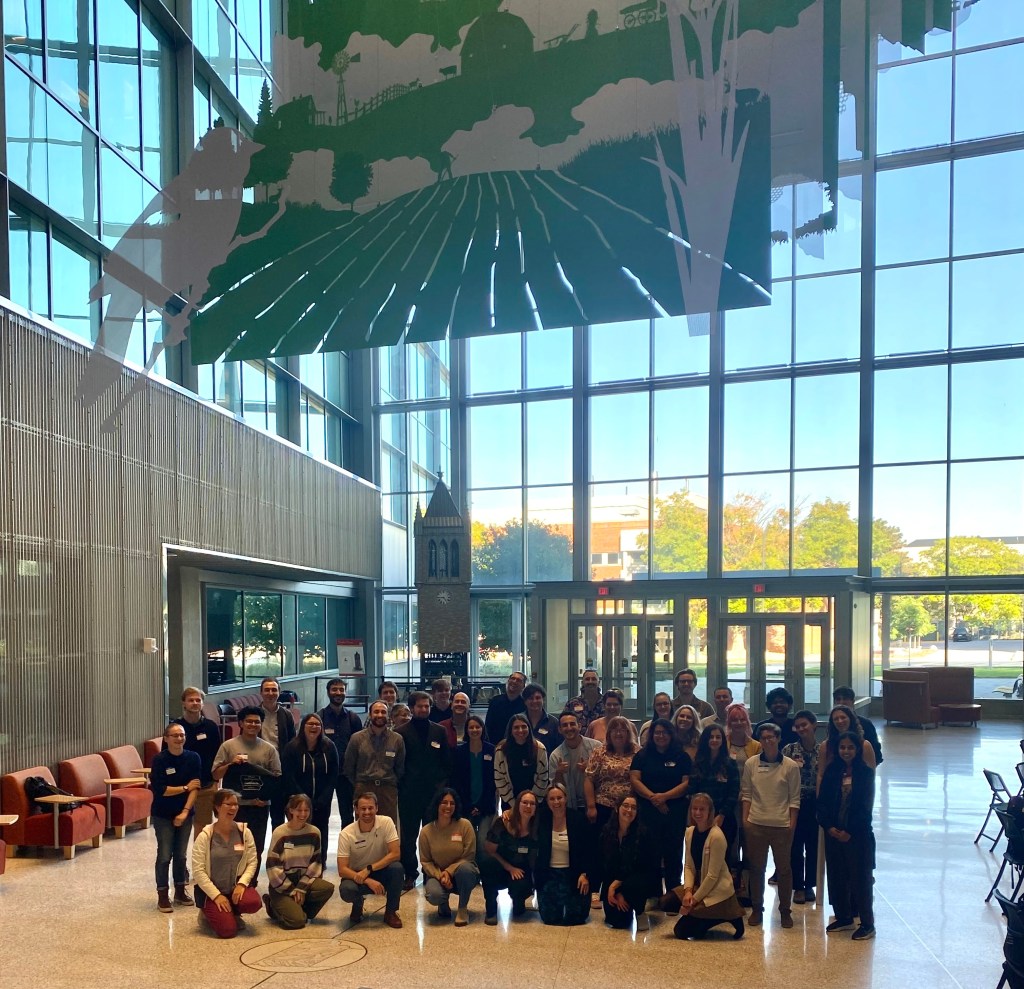
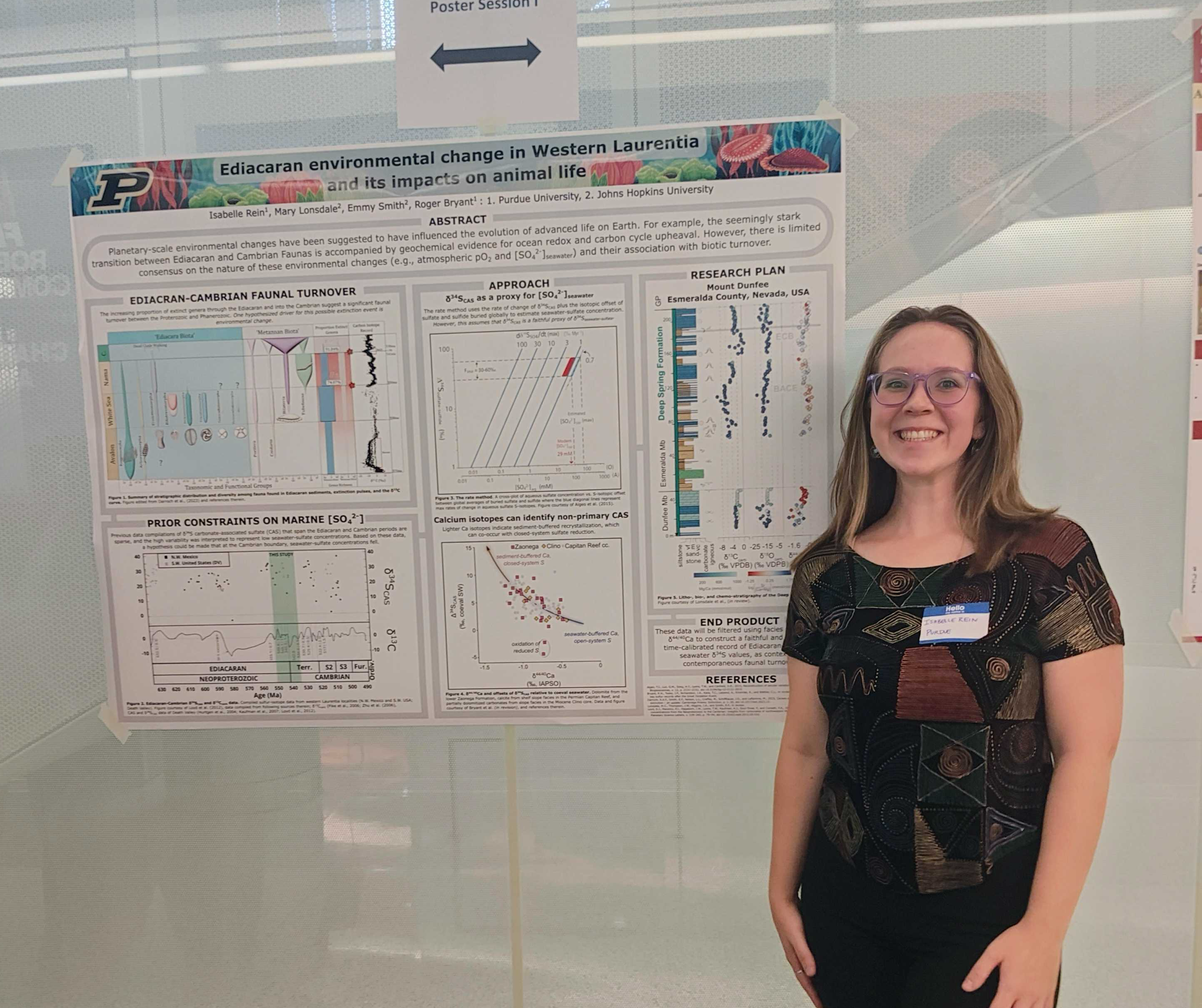
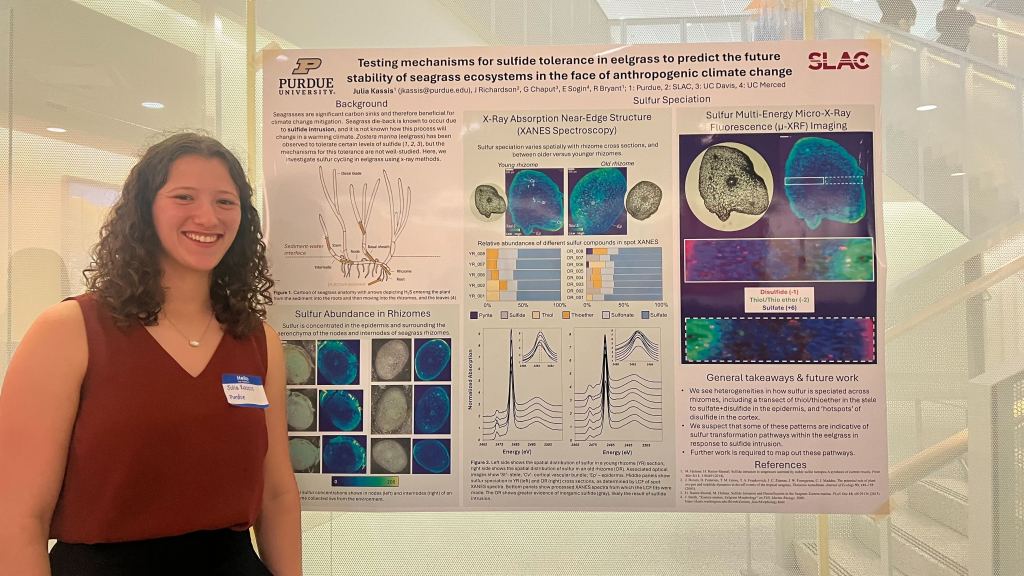
9/28/24 – The Bryant Lab attended our first conference–the 2024 Midwest Geobiology Symposium at Iowa State! All three of our students successfully presented posters detailing their recent research progress and plans, while Roger loitered awkwardly:

Julia Kassis (’26) interpreted her recent data from modern seagrasses analyzed at the Stanford Synchrotron Radiation Lightsource Laboratory. These data show sulfur concentration and speciation in seagrass tissues that may be indicative of sulfur transformation within the plants—providing ideas about the mechanisms seagrasses use to tolerate sulfide intrusion. An important start to determining how seagrasses might react to additional sulfide in the face of climate change!

Emily Apel (4th year PhD) showcased recent Scanning Electron Microscopy images of Morozovellid foraminifera from the Paleocene-Eocene Thermal Maximum. Soon these fossils will be analyzed for C-isotopes with the Wisconsin Secondary Ionization Mass Spectrometer!

Isabelle Rein (2nd year PhD) discussed how δ 34SCAS isotopes can be filtered with δ44/40Ca isotopes to constrain faithful records of Ediacaran-Cambrian seawater sulfate concentrations. Isabelle was also awarded Runner Up for the Best Graduate Student Poster!

Look out next year for the 2025 Symposium will be hosted at our home institution–Purdue University!